
The first move most homeowners make when a garage door won't cooperate on a cold morning is to mash the remote button over and over, or grab the manual release and muscle the door up by hand. It's tempting — you're already running late, the door moved an inch and stopped, and surely one more try will do it. But repeatedly triggering the opener when the door is stuck forces the motor to work against resistance it wasn't built for, which is a fast way to strip the gears inside the unit or burn out the motor. Forcing the door by hand can bend a track or pop rollers loose. Before you push harder, it helps to know what's actually going on.
What the Symptoms Usually Look Like
A garage door struggling with cold weather doesn't usually announce itself with one obvious problem. It shows up as a handful of small, annoying signs:
- The door moves a few inches, stalls, and the opener clicks or hums without finishing the job.
- The bottom edge seems stuck to the slab or driveway, especially after a rainy night followed by a sudden temperature drop.
- The door feels noticeably heavier than usual when lifted manually.
- Opening and closing is slower than normal, with more groaning or grinding from the tracks.
- The door reverses on its own partway through closing, even with nothing blocking the sensors.
None of these are random. Each points to something specific, and a technician works through them in a set order — starting with the simplest, most common culprit and moving toward the ones that take more time to diagnose.
Cause #1: The Bottom Seal Is Frozen to the Ground
This is the first thing checked because it's the easiest to rule out. If there was rain the night before and temperatures dropped fast, water can pool under the door's bottom seal and freeze it to the slab or driveway. The fix here isn't force — it's patience. A technician will gently break the seal free rather than yank the door, then check whether the rubber seal itself has hardened or cracked, since stiff, brittle seals are more prone to sticking in the first place and may need replacing.
Cause #2: Spring Tension Behaving Differently in Cold Metal
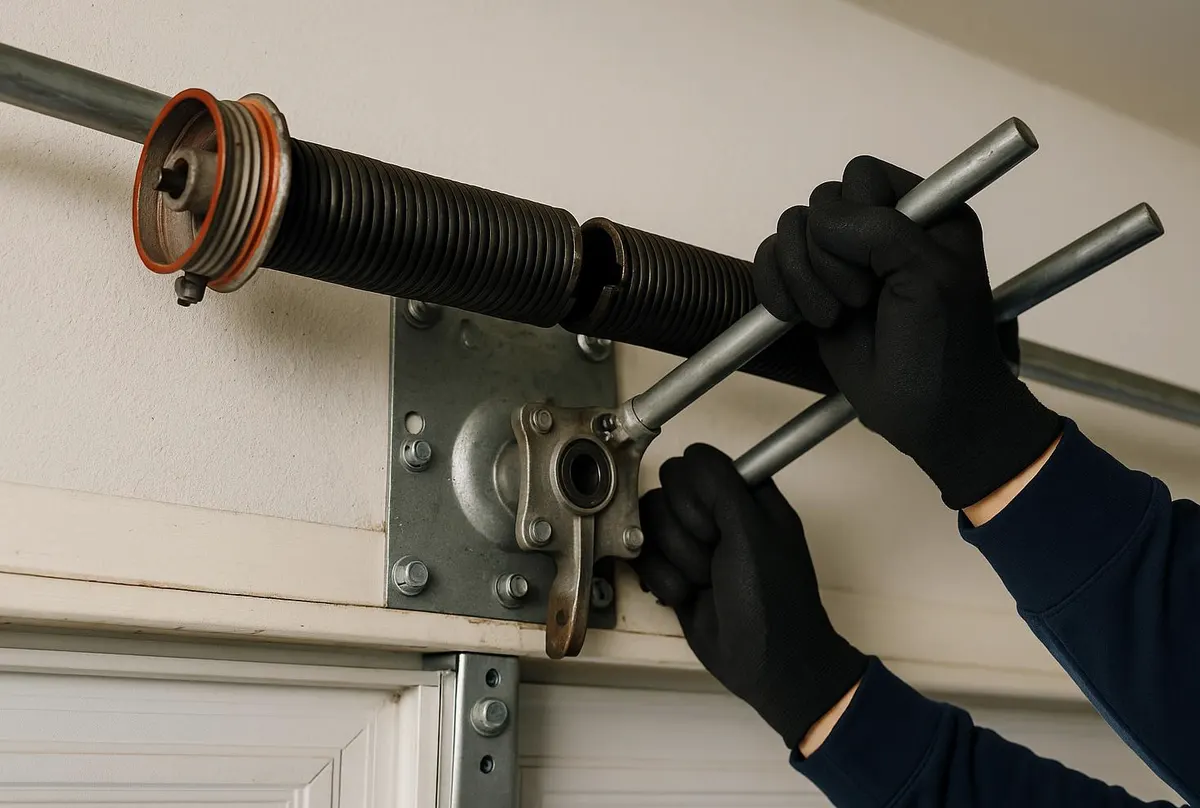
Steel springs contract slightly in cold weather and the lubricant on them thickens, so the door's counterbalance doesn't move as smoothly as it does in July. This is often what makes a door feel heavy to lift by hand or causes the opener to struggle partway up. A tech checks this by testing the door manually with the opener disconnected — if it's noticeably unbalanced or hard to lift, the springs may need adjustment or, if they're older and already near the end of their lifespan, replacement. Springs that are already weak will show this kind of strain first whenever conditions change.
Cause #3: Track Alignment Thrown Off by Moisture Swings
Trussville-area homes deal with real humidity swings — soaked from summer downpours one month, drying out as temperatures fall the next. That moisture cycle can cause wood door framing to swell and shift slightly, which nudges the tracks out of true alignment. A misaligned track makes the door bind or grind partway through its travel, which can look identical to a spring problem until it's checked. Fixing this means loosening the track brackets, realigning the track with a level, and retightening — straightforward, but it has to be done precisely or the problem comes right back.
Cause #4: Old or Gummed-Up Lubricant
Standard grease and lubricants stiffen in cold weather, and if the rollers, hinges, and tracks haven't been lubricated with something rated for temperature swings, that stiffness shows up as slow, noisy movement. The fix is simple — clean off the old buildup and reapply a lubricant made for garage door hardware, not household oil, which attracts dust and grime instead of protecting the metal.
Cause #5: Opener Sensors or Limit Settings Drifting
If the door reverses unexpectedly or the opener runs but the door doesn't move the full distance, the photo-eye sensors near the bottom of the track are checked next. Cold mornings bring condensation, and a foggy or dirty sensor lens can misread the door's path. This is a quick fix — clean the lenses and confirm they're aligned facing each other. If the issue persists, the opener's travel limits may need to be reset, which is a slightly more involved adjustment inside the unit itself.
When to Call Trussville Garage Door
If you've ruled out a simple frozen seal and the door is still heavy, slow, or stalling, that's the point to stop troubleshooting on your own. A door that feels unbalanced usually means the springs need professional attention — not a DIY adjustment, since they're under serious tension. Trussville Garage Door handles both Spring Replacement and Garage Door Opener Repair & Installation, and we'll walk through the same checklist above on-site so you know exactly what's causing the problem before any work starts.
If your door's been fighting you every cold morning for weeks, don't wait for it to fail completely. Call Trussville Garage Door and we'll get it moving the way it should — plain explanations, honest pricing, no guesswork.